
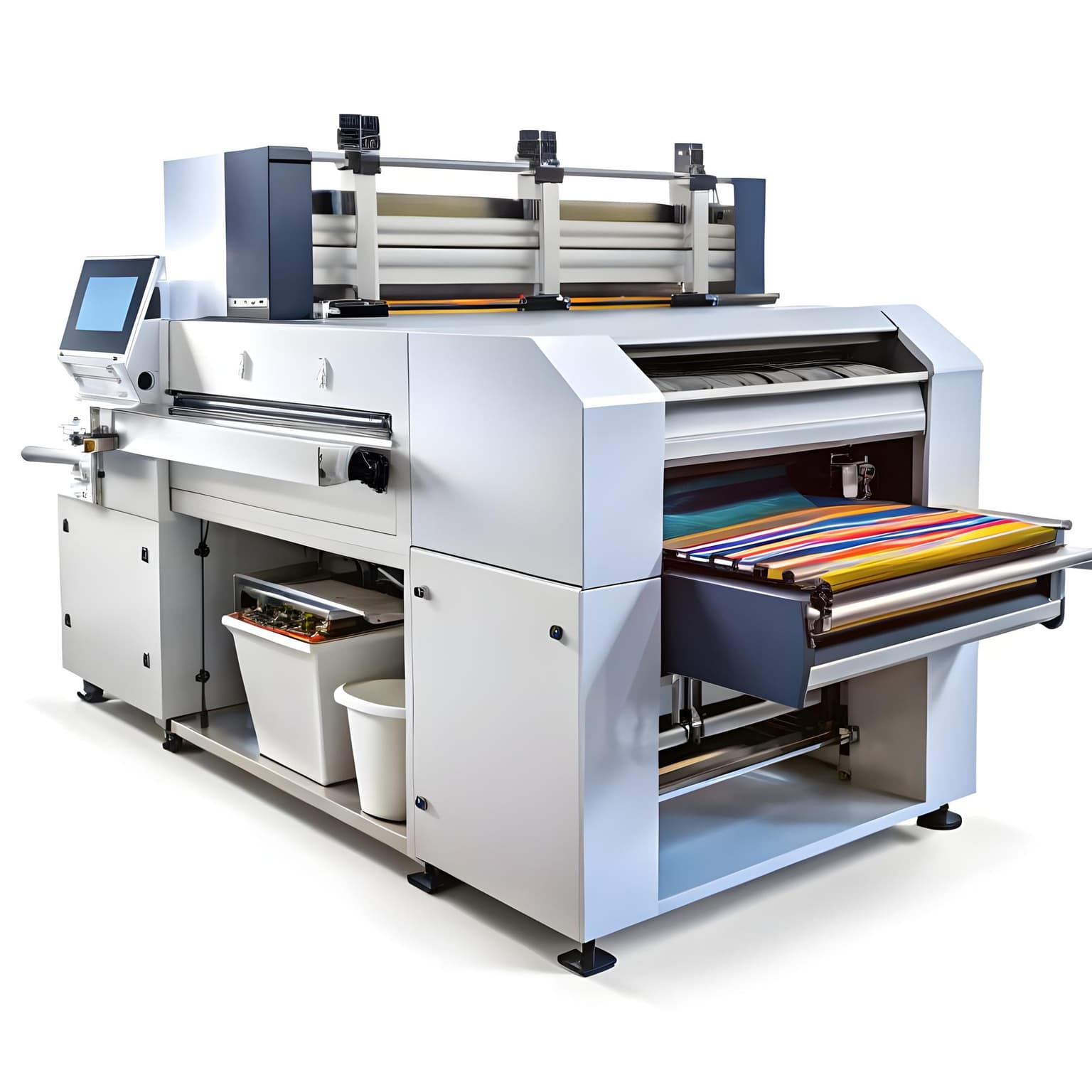
Efi Fiery Serialized QR Printing is an execution problem as much as an integration problem. The real work lies in model and protocol assessment, job control, operator behaviour, completion evidence, recovery, and multi-vendor monitoring.
This guide explains the subject in practical terms for brands and manufacturers. It follows the decision from business need through execution, user response, exceptions, and evidence. Recommended next step: Assess RIP, file, batch, and completion workflows.
Direct answer: EFI Fiery serialized QR printing refers to industrial printer gateway integration applied to a defined product, user, business decision, and operating workflow.
Definition
EFI Fiery serialized QR printing refers to industrial printer gateway integration applied to a defined product, user, business decision, and operating workflow.
Why Efi Fiery Serialized QR Printing Matters
Industrial printers do not behave like office devices. Models, firmware, protocols, job types, operator steps, and completion signals vary across vendors and factories.
For production engineers, packaging converters, printer OEMs, system integrators, and plant IT teams, the decision affects a controlled route from cloud-issued serialized data to existing industrial printers and back to production monitoring. The article also expands beyond inline coding into digital print.
A useful implementation makes three things clear: what the system knows, what the user should do, and which team owns the next action. When those answers are vague, data grows without improving the decision.
Where AIQR Fits
AIQR positions itself as a connected product identity and factory-floor serialization platform for brands and manufacturers. For the topic in this article, the platform can be evaluated as an operating layer that can:
- connect cloud or ERP-issued jobs to supported industrial printers through a gateway pattern
- manage product, batch, campaign, or serialized variable data
- provide operator controls and job status
- support printer-specific protocol assessment rather than assuming universal drivers
- bring several printer families into a common monitoring and product-identity workflow
The brand still owns the product policy, data accuracy, customer language, partner agreements, regulatory interpretation, and investigation decisions. The platform should make these rules executable and auditable rather than replacing business judgment.
Traditional Approach vs a Connected Workflow
| Area | Traditional or partial approach | Connected and governed approach |
|---|---|---|
| Primary purpose | Complete one technical or departmental task | Support the complete product and business decision |
| Identity context | May rely on a shared code, file, or summary record | Connects product, batch, unit, state, and event where required |
| Physical execution | Often assumed from a command or manual process | Uses defined printing, verification, reject, and reconciliation controls |
| User response | Generic or identical for every case | Changes according to product, market, role, state, or event context |
| Data ownership | Scattered across teams or vendor dashboards | Source and owner are defined for each important field |
| Exception handling | Resolved through email, spreadsheets, or memory | Uses named states, owners, severity, and closure records |
| Measurement | Counts activity | Measures completed actions, quality, risk, cost, and business outcome |
| Best fit | Simple, stable, low-risk requirement | A programme where a controlled route from cloud-issued serialized data to existing industrial printers and back to production monitoring |
The Decision This Article Helps the Reader Make
The decision this article helps the reader make is to assess RIP, file, batch, and completion workflows. The following areas should be reviewed together:
Printer and model
Protocol, firmware, resolution, speed, interface, and installed options differ even within a vendor family.
Job type
Static batch, variable text, serialized QR, coupon, label, and full digital artwork workflows need different execution models.
Operator controls
Start, pause, resume, retry, reject, and completion steps should match factory practice.
Status and evidence
The integration should define what can be confirmed by command response, printer state, counter, file result, or vision inspection.
How the Efi Fiery Serialized QR Printing Workflow Works
1. Define the decision and scope
Write one sentence that explains what EFI Fiery serialized QR printing must improve. Name the product, line, market, user, and decision owner. Avoid broad statements such as 'digitise packaging' or 'improve visibility.'
2. Choose the identity and data level
Decide whether the workflow needs product, batch, unit, case, pallet, site, participant, or event-level information. Use the lowest level that can reliably support the decision.
3. Identify trusted data owners
List every required field and the system or team that owns it. Typical examples include GTIN or SKU, batch, serial, expiry, market, printer job, warranty, partner, lifecycle status, and access rights.
4. Assess the printer and protocol
Collect model, firmware, interface, native protocol, job type, resolution, line speed, and completion signals. Do not assume that one vendor family or model behaves like another.
5. Define operator and recovery behaviour
Document start, pause, retry, reprint, reject, offline buffer, reconciliation, and job completion steps before integration testing.
6. Design the user and team response
Show print integration engineer the information needed to complete the immediate task. Keep internal technical detail out of the customer experience unless it helps the user act safely.
7. Record evidence and ownership
Store the event, state, review, decision, and owner needed to explain what happened later. A useful audit record should support operations without collecting unnecessary personal data.
8. Measure, review, and scale
Compare the pilot with approved measures. Expand only after physical execution, data quality, user completion, support workload, and exception handling are stable.
Workflow Table
| Stage | Input | Output | Primary owner |
|---|---|---|---|
| Define the decision and scope | Approved scope and available records | Write one sentence that explains what EFI Fiery serialized QR printing must improve. | Business sponsor |
| Choose the identity and data level | Approved scope and available records | Decide whether the workflow needs product, batch, unit, case, pallet, site, participant, or event-level information. | Product and data |
| Identify trusted data owners | Approved scope and available records | List every required field and the system or team that owns it. | IT or standards owner |
| Assess the printer and protocol | Approved scope and available records | Collect model, firmware, interface, native protocol, job type, resolution, line speed, and completion signals. | Packaging or operations |
| Define operator and recovery behaviour | Approved scope and available records | Document start, pause, retry, reprint, reject, offline buffer, reconciliation, and job completion steps before integration testing. | Quality and support |
| Design the user and team response | Approved scope and available records | Show print integration engineer the information needed to complete the immediate task. | User-experience owner |
| Record evidence and ownership | Approved scope and available records | Store the event, state, review, decision, and owner needed to explain what happened later. | Governance owner |
| Measure, review, and scale | Approved scope and available records | Compare the pilot with approved measures. | Programme manager |
What Users Receive
Operators and business teams should receive:
- a clear job, state, alert, or decision rather than an ambiguous technical message
- a documented way to pause, retry, reject, escalate, or recover
- product and batch context that matches the work being performed
- less dependence on manual serial entry and spreadsheet reconciliation
- a record that can be reviewed after the shift, incident, or rollout wave
What Brands and Business Teams Receive
The organisation should receive information that helps a named team act. Useful outputs include:
- an identity, job, product, event, or participant record that can be traced to its source
- defined normal and exception states
- timestamps, market or site context, and lifecycle information at an appropriate level
- completion and quality measures linked to the intended outcome
- evidence for support, audit, recall, enforcement, partner, or commercial review
- exportable records that do not depend entirely on one dashboard
The outcome should support a controlled route from cloud-issued serialized data to existing industrial printers and back to production monitoring. A large event count is not useful when no one knows what decision it should change.
Practical Example
Consider a factory using one or more industrial coder or digital-print systems from different vendors. The company selects a variable-data or serialized packaging job executed on an existing printer for a controlled pilot in two markets. The team uses the topic 'Konica Minolta and EFI Fiery Workflows for Serialized Label and Packaging Printing' to define how the first workflow should operate.
Before configuration, the team records the recommended next step: Assess RIP, file, batch, and completion workflows. It documents the product or job identity, required data, physical or partner process, user response, and owner for each exception. Language versions are reviewed with the operational workflow so the packaging promise and the factory or digital response remain consistent.
The pilot includes normal cases and deliberate failures. The team tests missing records, repeated identities, network loss, invalid access, rejected packs, partner delays, or other exceptions relevant to the topic. Results are compared with production, distributor, warranty, customer-service, compliance, or finance records instead of being judged by activity count alone.
At the end of the pilot, the company decides whether to expand, correct the workflow, change the identity level, or stop. This makes the pilot a business test rather than a demonstration.
Common Implementation Mistakes
Starting with technology instead of the decision
The team selects a barcode, platform, gateway, or dashboard before agreeing on the product, reader, business question, and owner.
Using a generic product or market model
The workflow assumes that every SKU, line, partner, country, and user behaves the same way.
Ignoring the physical or partner process
The digital model looks complete, but packaging, printers, operators, distributors, service teams, or retailers cannot execute it reliably.
Treating one event as proof
A first scan, repeat scan, location, printer response, or missing event is context. It needs supporting evidence before a strong conclusion is made.
Collecting data without a response owner
The platform produces alerts and reports, but no team has a time limit, escalation rule, or closure code.
Assuming command acknowledgement proves the physical result
The integration does not define what can be verified by printer state, counter, file completion, or inline vision.
Failing to test recovery and rework
Teams test the normal flow but not rejected packs, outages, corrections, duplicate attempts, partner delays, or access failures.
Expanding before the first workflow is stable
The organisation adds products, lines, countries, and integrations while data quality and operating ownership are still unclear.
What to Measure During a Pilot
| Metric | What it explains | Primary owner |
|---|---|---|
| Completion rate | Percentage of records or users that reach the intended product, production, traceability, reward, or compliance action | Programme owner |
| Data accuracy | Percentage of checked records that match the physical product, job, partner, or source system | Data owner |
| Exception rate | Share of identities, events, jobs, scans, or claims entering an exception state | Operations or risk |
| Resolution time | Time from exception creation to reviewed and documented outcome | Case owner |
| User success | Whether the operator, customer, partner, or authority receives the answer needed without avoidable support | Experience owner |
| Business outcome | The approved result such as lower rework, better recall retrieval, improved warranty accuracy, reduced abuse, or qualified channel evidence | Executive sponsor |
The measurement plan should compare results by product, site, market, partner, and time period. A metric becomes useful only when the next decision is defined.
Proof and Citation Opportunities
To make this article more useful and more citable, AIQR can add:
- a real workflow diagram for efi fiery serialized qr printing
- screenshots of normal and exception states with sensitive data removed
- a before-and-after process showing manual work, error points, and the connected workflow
- a small anonymised dataset with clear definitions and methodology
- a packaging, printer, partner, or customer test from a live production or market environment
- an implementation checklist completed against a real product or line
- a case-study timeline showing the decision, pilot, correction, and scale outcome
- an example of the audit, recall, investigation, reward, or executive report produced
Glossary
Printer gateway
A software layer that translates cloud or business-system jobs into commands and files a printer can execute.
Native protocol
The printer-specific command, network, file, or communication method used to control a device.
TIJ
Thermal inkjet, a coding technology commonly used for high-resolution variable printing on suitable substrates.
CIJ
Continuous inkjet, a coding technology used on high-speed lines and a wide range of products and surfaces.
TTO
Thermal transfer overprinting, commonly used on flexible films and labels.
RIP
Raster image processor software that prepares jobs for digital printing systems such as label and packaging presses.
Next step: Check printer and production compatibility
FAQs
Is this mainly a software decision?
No. It depends on product or job identity, data ownership, physical or partner execution, user response, exception handling, and business ownership.
Does every product need a unique serial?
No. Product-level, batch-level, unit-level, case, pallet, participant, or event identity should be selected according to the decision.
Can one universal printer driver support every industrial coder?
Usually not. Models, firmware, protocols, file workflows, interfaces, and completion signals differ. Compatibility should be assessed for the actual equipment and job type.
Should the pilot include failure cases?
Yes. Recovery, rejection, rework, invalid data, repeated events, outages, access problems, and partner delays often determine whether the programme is production-ready.
Can one identity support several business journeys?
Yes. The same governed identity can support selected authentication, traceability, warranty, service, loyalty, compliance, and product-information experiences.
What is the best first pilot?
Select one product or job, one market or site, one primary user, and one measurable outcome. The pilot should test this next step: Assess RIP, file, batch, and completion workflows.
What should be reviewed before wider rollout?
Review physical execution, data accuracy, user completion, exception ownership, support workload, security, portability, total cost, and the approved business outcome.
Conclusion
EFI Fiery serialized QR printing is most useful when it changes a real decision and remains reliable under normal and exceptional conditions. The organisation should connect identity, data, execution, user response, ownership, and measurement.
For brands and manufacturers, the strongest starting point is one product or job, one site or market, one primary user, and one measurable outcome. Recommended next step: Assess RIP, file, batch, and completion workflows. Once the workflow is stable, the same foundation can support broader authentication, traceability, compliance, loyalty, service, and executive reporting.
Related reading
- Domino Printer Integration for High-Speed Serialized Packaging
- How to Manage a Multi-Vendor Industrial Printer Fleet from One Platform
- Rynan Printer Integration for Serialized QR and Traceability Programs
- Industrial Printer Protocol Assessment Checklist for Serialization Projects
- What Is Connected Product Identity and How Does It Work?
Sources
- AIQR, Serialized Coding and Print Verification for Connected Packaging: https://aiqr.cloud/
- AIQR, KGK Printer Integration: https://aiqr.cloud/print-gateway-preview/kgk.html
- AIQR, Rynan Printer Integration: https://aiqr.cloud/print-gateway-preview/rynan.html
- GS1, Learn about 2D barcodes powered by GS1: https://www.gs1.org/standards/barcodes/2d
- GS1, GS1 System Architecture Document: https://www.gs1.org/standards/gs1-system-architecture-document/current-standard